



- February 25, 2026
- admin_wec
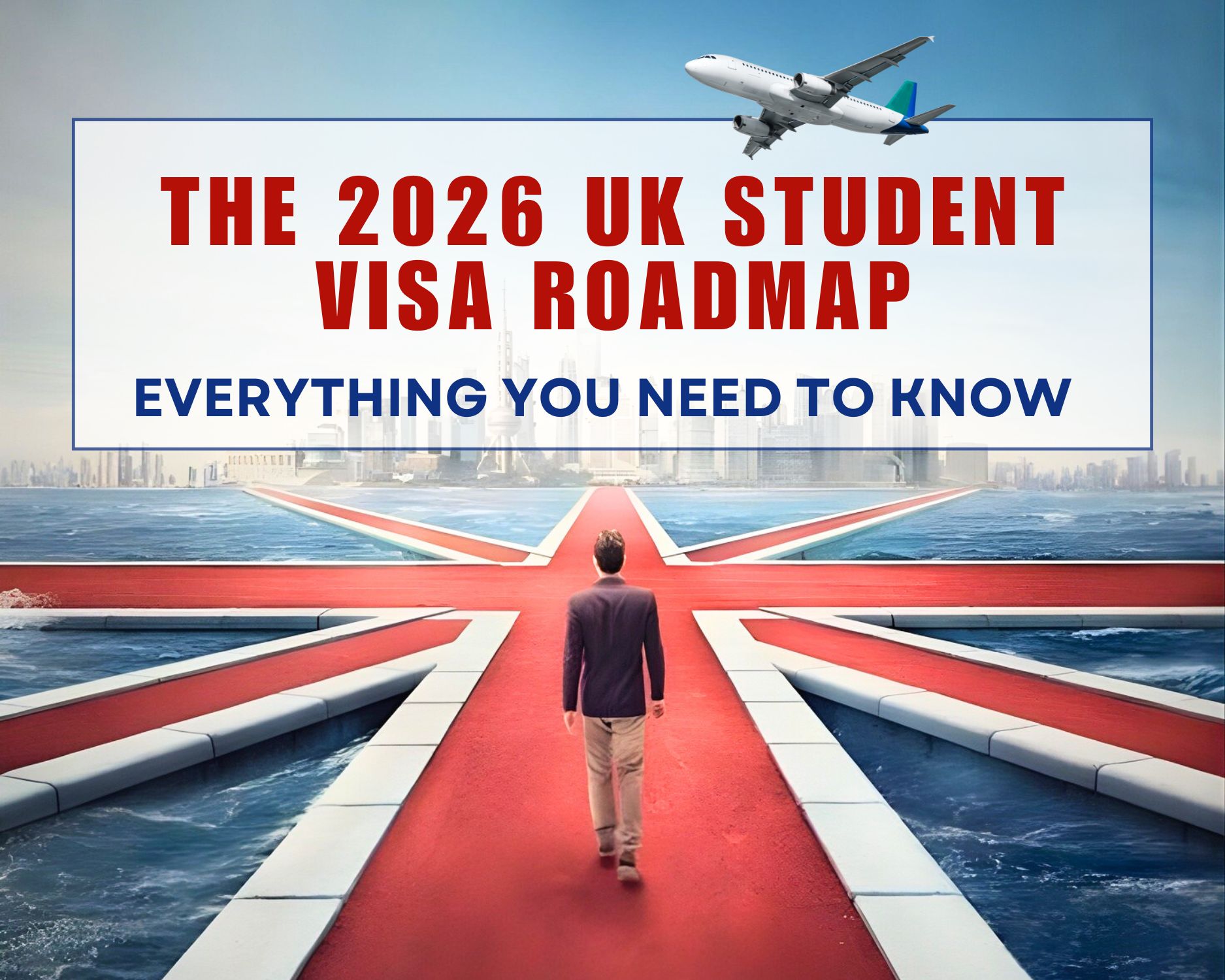
The 2026 UK Student Visa Roadmap: Everything You Need to Know
If you're planning to study in the United Kingdom in 2026, one thing is certain: the rules have changed, and staying uninformed is not an option. The UK Student Visa 2026 system looks meaningfully different from what applicants experienced even two years ago. The UK government has rolled out a series of significant updates — from a complete shift to digital visas, to higher financial maintenance thresholds, to a reshaped Graduate Route (Post-Study Work visa). Whether you're a prospective student just beginning your research or a current student planning your next steps, this complete UK Student Visa 2026 roadmap will help you navigate every critical change with clarity and confidence.
What Is the UK Student Visa in 2026?
The UK Student Visa 2026 — formally known as the Student Route — replaced the old Tier 4 visa system and remains the primary pathway for international students who want to pursue higher education in the United Kingdom. To be eligible, you must be at least 16 years old, hold an unconditional offer from a UK institution that holds a valid Student Sponsor licence, demonstrate sufficient English language proficiency, and meet updated financial maintenance requirements.
What makes the UK Student Visa 2026 different from previous years is not the existence of the visa — it's the increasingly digital, tighter, and more strategically demanding environment surrounding it.
The Shift to Digital Visas: The eVisa Revolution
One of the most transformative changes to the UK Student Visa 2026 process is the complete transition to digital immigration status through the eVisa system. Gone are the days of physical Biometric Residence Permit (BRP) cards stamped into your passport. Successful student applicants now receive an eVisa — a digital record linked to their UK Visas and Immigration (UKVI) online account.
What does this mean in practice? Once your visa is approved, you'll manage your immigration status entirely online. You'll log into your UKVI account to view your visa details, share your status with employers or landlords, and prove your right to study or work in the UK. When you travel internationally, border officials can verify your status digitally.
This shift streamlines bureaucracy in many ways — there's no longer a physical document to lose or carry anxiously across borders. However, it also introduces new responsibilities. Students must ensure their UKVI online account is set up correctly, that their email and contact details are kept current, and that they understand how to share their digital status with third parties when needed. Any disruption to your online account can complicate your daily life in the UK, so managing your digital identity proactively is essential.
Additionally, from 25 February 2026, visitors from 85 countries now need a UK Electronic Travel Authorisation (ETA) to enter the UK, even for short trips. While this primarily affects visitors rather than enrolled students, it matters for family members or friends planning to visit you during your studies.
New Financial Maintenance Requirements: How Much Do You Really Need?
Perhaps the most practically impactful change for prospective students is the updated UK Student Visa 2026 financial maintenance requirements. The UK Home Office raised the minimum living cost figures to better reflect real-world expenses — and the numbers are substantial.
For 2026, you must demonstrate:
- £1,529 per month if studying in London (totalling £13,761 for 9 months)
- £1,171 per month if studying outside London (totalling £10,539 for 9 months)
On top of this, you must also show that you can cover your remaining tuition fees as stated on your Confirmation of Acceptance for Studies (CAS). Your CAS is a unique reference number issued by your university that forms the backbone of your visa application.
The 28-Day Rule — Don't Get Caught Out
The 28-day rule is one of the most commonly misunderstood requirements and is responsible for a significant number of visa refusals. Your bank statements must show that the required minimum funds were held in your account for 28 consecutive days, and the end date of that 28-day period must fall within 31 days of your visa application date.
For example, if you apply on 15 October 2026, your account balance must show the minimum required amount from at least 14 September through 14 October 2026 — without dipping below the threshold at any point.
What UKVI Will Not Accept
Not all money counts. UKVI rejects financial evidence from sources including:
- Overdraft or borrowed funds
- Cryptocurrency or digital wallets
- Stocks, shares, or pension savings
- Any account not regulated by the relevant national financial authority
Always rely on verified, easily accessible savings or current accounts from a recognised financial institution.
If you are government-sponsored or on a full scholarship, your funding may already be reflected on your CAS, which can satisfy or reduce the financial evidence requirement. Always check with your institution first.
English Language Requirements: Tightening Standards
From January 2026, English language requirements have been strengthened across multiple visa routes. To meet UK Student Visa 2026 eligibility, most applicants must demonstrate CEFR Level B2 proficiency across all four skills — reading, writing, speaking, and listening — through an approved Secure English Language Test (SELT) such as IELTS Academic UKVI or PTE Academic UKVI.
Some applicants may be exempt if they have previously studied in English or their university conducts its own English assessment. However, it's critical to confirm your institution's policy early, as booking an approved test at the right time can prevent costly application delays.
The Graduate Route (Post-Study Work Visa) in 2026: What You Must Know
The Graduate Route — also known as the Post-Study Work (PSW) visa — allows international students to remain in the UK after completing their degree to work or look for work. It has long been one of the most attractive features of studying in the UK. In 2026, however, it carries an important caveat that every student must understand.
Current Status in 2026
As of now, the Graduate Route still grants:
- 2 years of post-study stay for bachelor's and master's graduates (for applications made before 1 January 2027)
- 3 years for PhD and doctoral graduates (unchanged)
The route remains unsponsored, meaning you do not need a job offer to apply. You can work at any skill level, switch jobs freely, and use the time to build experience and find a pathway to a skilled worker visa.
The Change You Cannot Ignore — Coming January 2027
If you are starting your studies in January 2026 or later, pay close attention: successful Graduate Route applications made on or after 1 January 2027 will only grant 18 months of post-study stay for bachelor's and master's graduates — a reduction of six months from the current two-year window.
This change was announced in the UK government's Immigration White Paper in May 2025 and is now confirmed policy. PhD graduates are not affected and will continue to receive three years.
What does this mean practically? Six months fewer is a material difference when you're job hunting, building a professional network, and navigating visa transitions. The Graduate Route cannot be extended, so once your 18 or 24 months expire, you must switch to another eligible route — most commonly the Skilled Worker Visa — or leave the UK.
Planning Your Career Pathway Earlier
The narrowing of the Graduate Route window means strategic career planning is no longer something you can defer to your final year. International students arriving in 2026 should:
- Start networking and applying for graduate jobs from year one, not year three
- Understand the Skilled Worker Visa salary thresholds (currently £41,700 for most roles) and target employers who hold sponsor licences
- Consider internships and placement years as critical pipeline-building exercises
- Explore whether a doctoral programme aligns with your academic interests, since PhD graduates still benefit from a three-year post-study window
Dependants: Who Can Bring Family in 2026?
Since January 2024, the rules on dependants have significantly tightened and remain in place under the UK Student Visa 2026 framework. Only PhD or research-level students and those on government-sponsored scholarships can bring their spouse, partner, or children to the UK on a student dependent visa.
Undergraduate and taught master's students can no longer bring dependants under the Student Route. This is one of the most life-altering changes for international students with families and is a key consideration when planning your studies and budget.
Visa Fees in 2026
The current UK Student Visa 2026 application fee is £524. This is the base fee and does not include the Immigration Health Surcharge (IHS), currently set at £776 per year of your visa duration. The IHS grants you access to the NHS during your stay and is a mandatory component of your application. For a three-year master's programme, for instance, the IHS alone would total over £2,300, so factor this into your overall budget.
Sponsor Compliance: Why Your University Choice Matters More Than Ever
In 2026, the Home Office has intensified scrutiny of university compliance — another reason to take your UK Student Visa 2026 university selection seriously. If a university's Student Sponsor licence is suspended or revoked due to non-compliance, enrolled students may be forced to transfer or even leave the UK. This risk, while relatively rare, underscores the importance of choosing a university with a strong compliance record and a well-established international student support structure.
Final Checklist: Preparing Your UK Student Visa 2026 Application
Before you submit, run through these essentials:
- ✅ Valid CAS from your university with accurate fee and course details
- ✅ Bank statements showing maintenance funds for 28 consecutive days, ending within 31 days of application
- ✅ Approved English language test results at B2 level
- ✅ Valid passport with at least six months' validity beyond your intended study period
- ✅ UKVI account set up and ready for your eVisa
- ✅ Immigration Health Surcharge paid in full
- ✅ Understanding of the Graduate Route timeline relevant to your start date
The Bottom Line
The UK Student Visa 2026 landscape is more demanding than in previous years, but the UK remains one of the world's most rewarding destinations for international education. World-class universities, globally respected qualifications, and a dynamic post-study work environment still make it highly competitive with Australia, Canada, and the United States.
The key difference in 2026 is that the margin for error has shrunk. Higher financial thresholds, a digital-first immigration system, stricter English requirements, and a shortened Graduate Route window mean that preparation, timing, and strategic thinking are more essential than ever. Students who understand the UK Student Visa 2026 rules, plan ahead, and engage with their university's international office early will be best positioned to turn their UK study ambitions into a long-term success story.
https://www.wecoverseaseducation.com/https://www.instagram.com/wecoverseaseducation/https://www.facebook.com/WECoverseas
- 08 April 2026
- admin_wec

- 17 March 2026
- admin_wec
- 25 February 2026
- admin_wec

- 13 February 2026
- admin_wec
- 26 January 2026
- admin_wec