


- April 30, 2026
- admin_wec
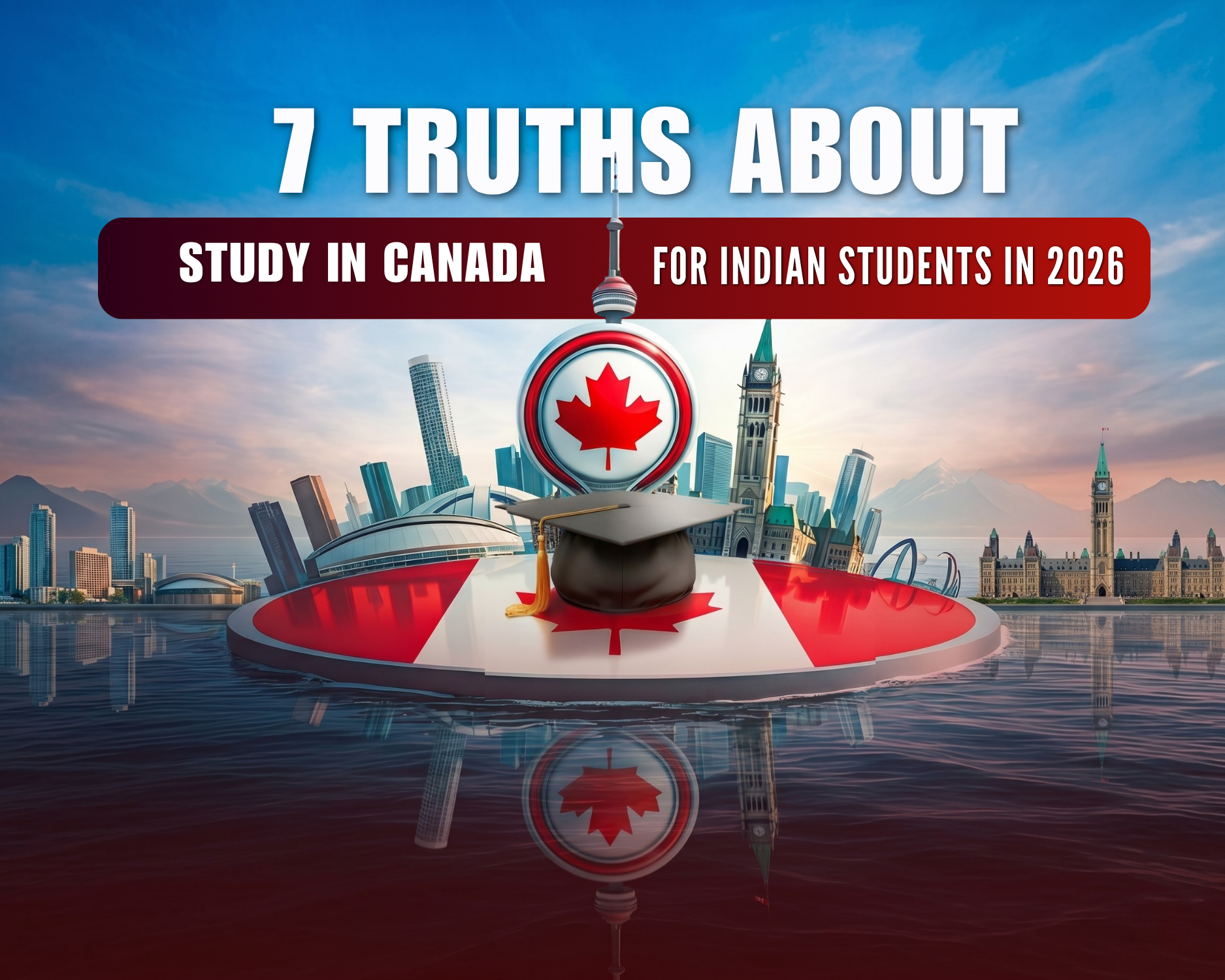
Study in Canada for Indian students in 2026 is no longer the straightforward dream it once was — and every family considering it deserves to know the full, unfiltered truth before spending a single rupee on applications.
Until a couple of years ago, the decision to study in Canada was almost automatic for Indian students. Canada was affordable, welcoming, and offered one of the clearest pathways from a student visa to permanent residency anywhere in the world. But 2026 has changed the conversation completely. Rejection rates are at record highs. Visa caps have been slashed. And the question has shifted from "how do we go to Canada?" to "should we go to Canada at all?"
At WEC Overseas Education, we believe you deserve an honest answer — not a sales pitch. So here are 7 truths about whether you should study in Canada for Indian students in 2026, covering both the real challenges and the genuine opportunities that still exist.
1. The Rejection Reality: Yes, It Has Gotten Harder
Let's address the biggest concern first. Canada's study permit rejection rates for Indian students have risen sharply. In August 2023, the rejection rate for Indian applicants was around 32%. By August 2025, that number had climbed to a staggering 74% — meaning roughly 3 out of every 4 Indian applications were being turned down outright.
The number of Indian applicants also dropped from over 19,000 in August 2023 to fewer than 4,000 in the same period in 2025. Study permits issued to Indian students have plunged nearly 50%, and visa processing times now average 11 weeks, up from just 6 weeks a year ago.
This is not a small dip. This is a fundamental shift in how Canada is managing international student intake. If your consultant hasn't shown you this data yet, that should tell you something important about how they run their business.
The takeaway: The old "apply and wait" approach no longer works for those who want to study in Canada. You need a proper, well-prepared strategy.
2. The Cap Is Real — But It Doesn't Affect Everyone Equally
Canada has set a national cap of 408,000 new study permits for 2026, down from 485,000 in 2024. This sounds alarming — and for some students, it genuinely is. However, there is an important distinction most people miss.
From January 1, 2026, Master's and PhD students at public universities are fully exempt from the cap and do NOT need a Provincial Attestation Letter (PAL). PhD applicants also benefit from a fast-track 14-day priority processing window.
This is significant. If you are planning to study in Canada at the postgraduate level at a reputed public university, the process is actually smoother in 2026 than it was in 2024–2025. The cap primarily squeezes undergraduate, diploma, and private college applicants.
The takeaway: Your program level and institution type now matter more than ever. Undergraduate or diploma applicants face a tougher road; Master's and PhD applicants at public universities have a far cleaner path.
3. The Financial Bar Has Gone Up Significantly
To even qualify for a study permit in 2026, Indian students who want to study in Canada must demonstrate they can financially support themselves without depending on part-time work income. The minimum GIC (Guaranteed Investment Certificate) requirement is now CAD 22,895 — approximately ₹14.3 lakhs — on top of first-year tuition fees and travel costs.
For most Indian families, the total annual budget to study in Canada now ranges between ₹18 lakhs to ₹35 lakhs per year, depending on the city and course. Toronto and Vancouver remain expensive; provinces like Manitoba, Saskatchewan, and Alberta are noticeably more affordable and increasingly popular among strategic applicants.
Visa officers are also scrutinising the source of funds — a recent lump sum deposit or an undisbursed loan can directly trigger rejection. Your documentation must show a consistent, credible financial history built over time.
The takeaway: Financial planning needs to begin 6–12 months before you apply to study in Canada, not 6 weeks before.
4. The PGWP Is Still One of the Best Post-Study Work Permits in the World
Here is where the opportunity to study in Canada still genuinely shines. The Post-Graduation Work Permit (PGWP) remains one of the most generous post-study work rights available globally. A Master's degree graduate can receive a 3-year open work permit — meaning you can work for any employer anywhere in Canada after graduation.
This directly feeds into Express Entry and the Canadian Experience Class, which is one of the most reliable pathways to Permanent Residency (PR) in the world. For those in high-demand fields — healthcare, engineering, data science, cybersecurity, and skilled trades — the study → PGWP → PR sequence is still coherent and achievable.
However, there are now language requirements attached to the PGWP: CLB 7 for university graduates and CLB 5 for college graduates. Private college graduates may no longer qualify at all. Spousal open work permits are now largely restricted to spouses of Master's and PhD students only.
The takeaway: The post-study pathway is still among the best in the world for those who study in Canada — but only if you choose the right institution, the right program, and meet the language benchmarks.
5. The Right Courses Can Still Get You Hired — and Help You Settle
Not all courses are equal in 2026. Canada is using its PGWP and PR pathways to direct graduates into sectors where actual labour shortages exist. The fields that still make the strongest case to study in Canada for Indian students in 2026 are:
- Healthcare and Nursing — Canada's aging population has created a critical, long-term need for medical professionals across all provinces.
- STEM Fields — Data science, AI, cybersecurity, and environmental engineering remain top priorities for Canadian employers.
- Skilled Trades — Advanced manufacturing and construction are actively recruiting internationally trained specialists.
- Early Childhood Education — One of the fastest-growing sectors in provincial hiring right now.
Students who completed general management diplomas at private colleges are in a far more uncertain position in 2026. If your course does not align with Canadian labour market needs, the pathway to staying back becomes much harder and far less predictable.
The takeaway: Choose your course based on Canadian job market demand — not just what interests you or what is cheapest.
6. Smaller Provinces Are Becoming the Smartest Choice
One of the most underrated strategies for Indian students who want to study in Canada in 2026 is looking beyond Toronto and Vancouver. Provinces like Manitoba, Saskatchewan, Nova Scotia, and Alberta offer lower costs of living, specific Provincial Nominee Programs (PNPs) for graduates in high-demand fields, and — critically — better visa approval odds since their quotas are far less exhausted than Ontario's.
Alberta has a strong job market in engineering, IT, and energy. Saskatchewan actively recruits healthcare workers and educators through its PNP. These provinces may lack the glamour of Toronto, but they consistently deliver stronger outcomes for graduates who want to work, earn, and settle in Canada.
The takeaway: Don't automatically target Ontario. Research smaller provinces — they may offer you a much clearer road to your goals.
7. Study in Canada for Indian Students 2026: Still Worth It — For the Right Person
Here is the honest bottom line: to study in Canada for Indian students in 2026 is no longer the forgiving, wide-open opportunity it was in 2021 or 2022. It has become more selective, more expensive to enter, and far more demanding in its expectations.
But it is still absolutely worth it for the right student — one who:
✅ Is applying for a Master's or PhD at a recognised public university ✅ Has chosen a labour-market-aligned course in STEM, healthcare, or skilled trades ✅ Has clean, well-documented finances prepared well in advance of applying ✅ Has a genuine academic plan — not just a migration strategy in disguise ✅ Is targeting smaller provinces with less competition and better PR pathways ✅ Has a strong IELTS score (7.0+ for Master's applications)
For these students, Canada offers something very few countries can match: world-class education, a 3-year open work permit, a multicultural and safe society, and a credible, structured path to permanent residency.
For students who were viewing Canada primarily as an affordable route to settlement, or applying to private diploma colleges as a shortcut, the 2026 system has deliberately closed most of those doors.
Final Word from WEC Overseas Education
At WEC, we have guided hundreds of students and families from Surat and across Gujarat through the overseas education journey — during easy times and difficult ones. Our honest advice for those who want to study in Canada for Indian students in 2026 is simple: don't be put off by the headlines, but don't be naive either.
Canada remains one of the best countries in the world to study, work, and build a future. But it now rewards preparation, honesty, and strategic thinking over shortcuts and last-minute decisions.
If you are serious about your plans to study in Canada in 2026, the time to plan is right now — not after your 12th board results, not after your graduation ceremony, but today.
📞 Book a free consultation with WEC Overseas Education and let our experts build a personalised Canada strategy that is right for your profile, your goals, and your budget.
https:https://www.wecoverseaseducationhttps://www.instagram.com/wecoverseaseducation/https://www.facebook.com/WECoverseas
- 12 September 2026
- admin_wec
- 05 September 2026
- admin_wec

- 29 August 2026
- admin_wec
- 22 August 2026
- admin_wec

- 15 August 2026
- admin_wec